
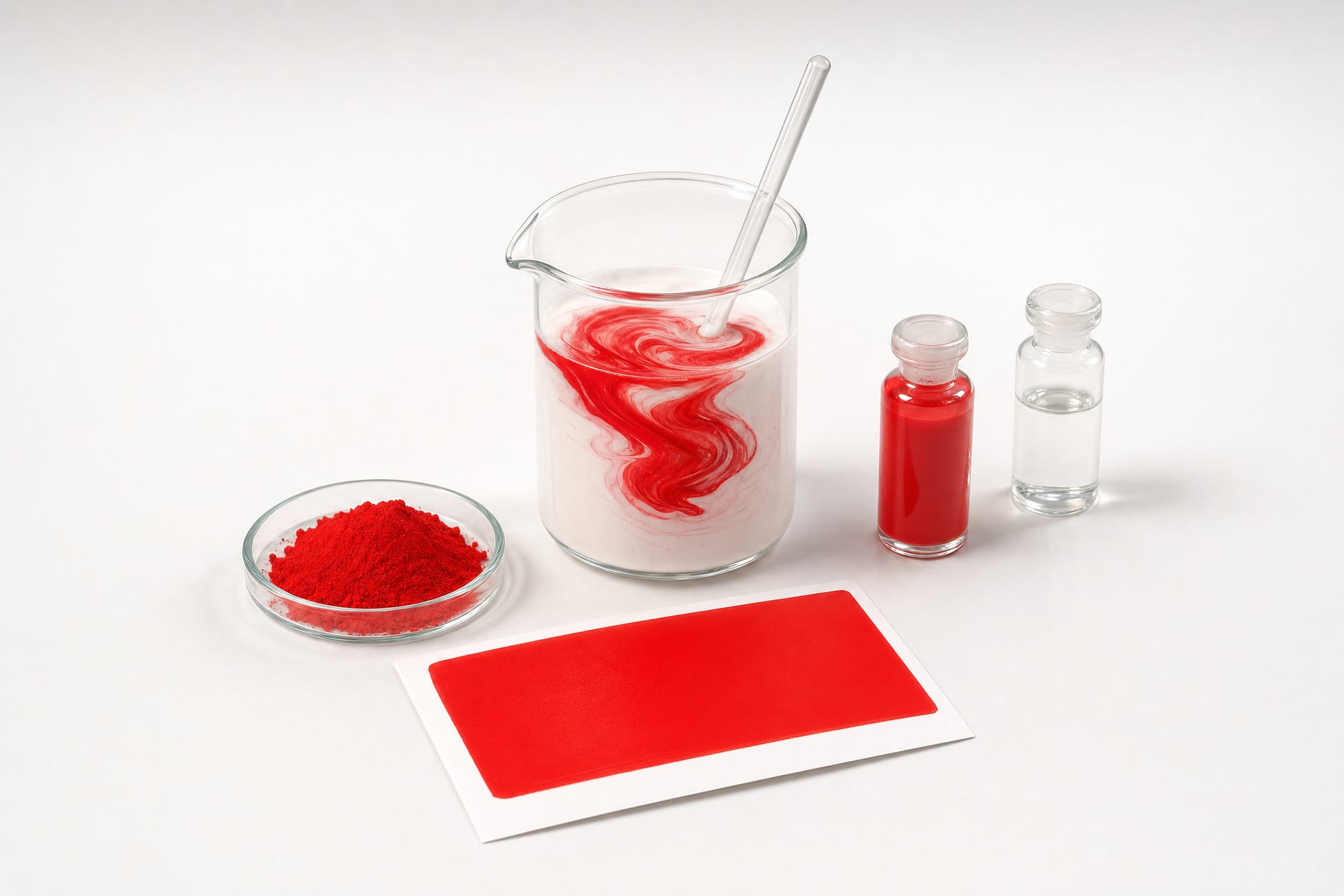
Pigments
The raw material of color.
Organic and inorganic pigments for industry: plastics, paints, inks and other applications.
Criteria
How a pigment is selected
Five criteria that decide whether a pigment works in your resin, your system or your ink. The same ones the lab reviews before proposing a product.
Organic or inorganic
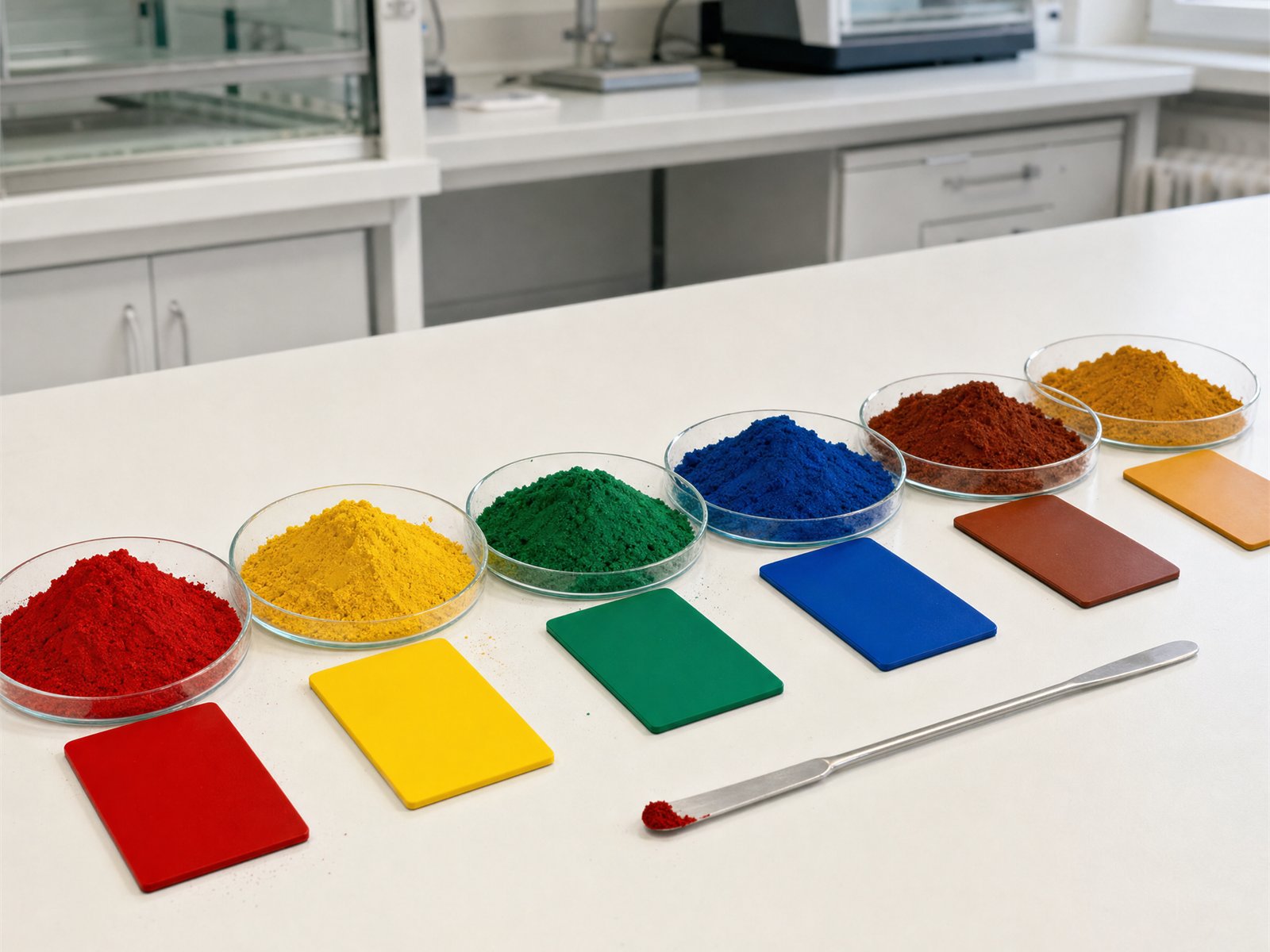
Organic pigments offer greater brightness and tinting strength at lower dosages. Inorganic pigments provide higher opacity and greater heat and light resistance. The choice depends on the resin, the processing temperature and the end use; many formulations combine both.
Lightfastness
Resistance of the color to fading under light exposure, rated on the blue wool scale from 1 to 8. For outdoor parts, high lightfastness should be specified and confirmed on the technical data sheet.
Color migration
Movement of the pigment toward the surface of the part, where it can transfer to materials in contact. It is prevented by selecting pigments with migration resistance validated for that resin and that processing temperature.
Powder or masterbatch
Powder pigment offers full formulation control and a lower cost per kilogram, and requires dispersion equipment in house. Masterbatch arrives predispersed and reproduces the shade with less batch to batch variation.
Food contact
Only pigments that meet the applicable reference are used, usually FDA for the intended use. The end use should be declared from the quote stage.
Frequently asked questions
Questions about pigments
If your question is not here, write it in the quote form and we answer it with technical judgment.
Pigments
Organic, inorganic, lightfastness and color migration.
What is the difference between an organic and an inorganic pigment?
Organic pigments offer greater brightness and tinting strength at lower dosages. Inorganic pigments provide higher opacity and greater heat and light resistance. The selection depends on the resin, the processing temperature and the end use, and many formulations combine both.
What is the lightfastness of a pigment?
It is the resistance of the color to fading under light exposure. It is rated on the blue wool scale from 1 to 8, where 8 corresponds to the highest performance. For outdoor parts, high lightfastness pigments should be specified and confirmed on the technical data sheet.
What is color migration in plastics?
It is the movement of the pigment within the part or toward its surface, where it can transfer to materials in contact. It is associated with overdosing, processing conditions outside the recommended range and additives competing at the surface. It is prevented by selecting pigments with migration resistance validated for that resin and that processing temperature.
Powder pigment or masterbatch?
Powder pigment offers full formulation control and a lower cost per kilogram, and requires dispersion equipment in house. Masterbatch arrives predispersed, doses cleanly and reproduces the shade with less batch to batch variation. For continuous color production, masterbatch is the more stable option.
Which pigments are suitable for food contact?
Only those that meet the applicable reference, usually FDA for the intended use. In the Delta stock line catalog each masterbatch states whether it is recommended for food contact or not. It is best to declare the end use from the quote stage.
How do I request a pigment quote?
Through the website form, by WhatsApp or by phone. Send the shade reference, the system where it will be used (resin, water based, solvent based or ink), the process and the estimated volume. You can attach a photo of the part or the technical data sheet. With that we propose the pigment and confirm availability. Every request is reviewed within 24 business hours.
Quote
Tell us about your development
Three pieces of information are enough to start: shade reference, application and estimated volume. Every request is reviewed within 24 business hours.
Phone
Hours
Monday to Friday, 8:00 am to 6:00 pm